
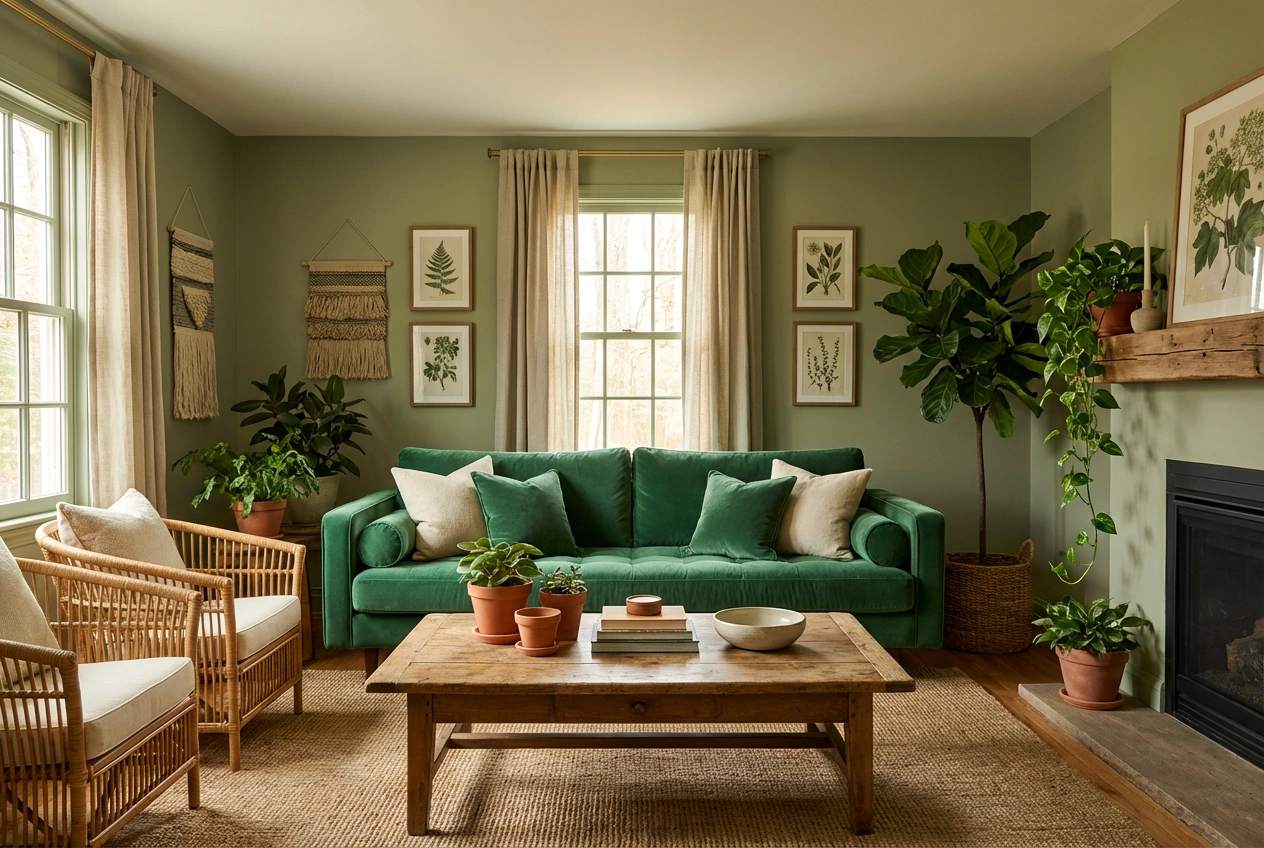
12 Earthy Color Palettes with Green Color Palette Combinations for a Cozy Living Room 2025
Introduction to 12 Earthy Color Palettes with Green Color Palette Combinations for a Cozy Living Room 2025
Imagine stepping into a living room that feels like a serene, natural sanctuary—a space that instantly calms your senses and wraps you in comfort. This is the transformative power of earthy color palettes, especially those anchored by a sophisticated green color palette combination. As we move into 2025, the desire for homes that offer refuge from the fast-paced world is stronger than ever. Consequently, interior design is embracing hues drawn directly from the landscape: mossy greens, warm terracottas, soft clays, and deep, organic browns. These tones work in beautiful harmony to create an environment that is both visually grounding and emotionally uplifting.
A thoughtfully curated green color scheme acts as the perfect foundation for this aesthetic. It’s versatile, ranging from the lightest sage to the deepest forest, and pairs effortlessly with other earth tones. This approach to decor is more than just a trend; it’s a holistic design philosophy that connects your indoor space to the natural world outside. Whether you’re a homeowner embarking on a full renovation, a renter seeking temporary transformations, or a DIY enthusiast looking for a weekend project, mastering these earthy green palettes is your key to crafting a living room that is not only stylish but also a genuine haven of peace and coziness.
Why Choose Earthy Green Palettes for Your Space in 2025
Choosing an earthy green color palette combination for your living room is a decision that pays dividends in comfort, style, and well-being. Firstly, these palettes are inherently calming. Green, in particular, is associated with tranquility, balance, and renewal. When combined with other natural tones like beige, ochre, or slate, it creates a visual harmony that reduces stress and promotes relaxation—a perfect antidote to modern life. This makes your living room not just a place to sit, but a true retreat for unwinding and recharging.
Furthermore, this design direction is remarkably versatile and timeless. Unlike fleeting trends, colors found in nature never truly go out of style. A well-executed earthy green palette can adapt to various aesthetics, from modern organic and rustic farmhouse to cozy minimalist. It also maximizes the perception of space; lighter earthy greens can make a small room feel airy and open, while deeper shades add intimate, cocooning depth. From a practical standpoint, these tones are exceptionally forgiving with dirt and wear, making them ideal for high-traffic family spaces. Ultimately, embracing this look means investing in a living room that feels both current and enduringly welcoming, a space that truly reflects a connection to the natural environment.
Key Elements & Design Components
Essential Decor Items for an Earthy Green Living Room
To successfully bring an earthy green color scheme to life, you’ll need to consider a cohesive selection of key elements. Start with your foundational green palette combination. This isn’t just about wall color; it’s about weaving green through furniture, textiles, and accessories. A sage green sofa, olive velvet armchairs, or a deep emerald area rug can serve as stunning anchor pieces.
Next, layer in complementary earth tones through materials and textures. Think:
* Furniture: Choose pieces in warm oak, light ash, walnut, or rattan. A chunky wooden coffee table or a woven cane sideboard adds instant organic character.
* Textiles: This is where coziness is built. Layer a nubby wool throw in camel over a linen sofa in cream. Add textured cushions in mustard, terracotta, or slate grey. A jute or sisal rug provides a perfect natural base.
* Accessories: Incorporate elements like unglazed terracotta pots, stoneware vases, dried pampas grass or branches, and artwork featuring landscapes or abstract natural forms.
* Lighting: Opt for fixtures with natural materials—paper lanterns, woven pendants, or ceramic table lamps with linen shades. Warm white bulbs (2700K) are essential to enhance the cozy, earthy glow.
Style Variations & Budget-Friendly Alternatives
The beauty of the natural green palette is its adaptability. For a modern organic take, stick to a more monochromatic green color combination with clean lines and smooth surfaces. For a rustic vibe, introduce more distressed woods, chunky knits, and vintage finds.
For those on a budget or dealing with rental restrictions, creativity is key:
* Walls: Use removable wallpaper in a botanical or textured pattern instead of committing to paint. Alternatively, paint a single accent wall or large canvases.
* Furniture: Upcycle second-hand wooden furniture with eco-friendly paint or stain. Slipcovers are an affordable way to transform an existing sofa with an earthy green hue.
* Textiles & Decor: Swapping out cushion covers, throws, and curtains is the most cost-effective way to shift your palette seasonally. Thrift stores are treasure troves for unique ceramic vases and art prints.
* Greenery: Never underestimate the power of real plants. They are the ultimate budget-friendly accessory that directly enhances your green-dominated palette and purifies the air.
How to Achieve the Look: Step-by-Step Styling Guide
Crafting your cozy sanctuary is a rewarding process. Follow these steps to build your earthy green living room layer by layer.
Step 1: Define Your Core Green Color Palette Combination
Begin by selecting your primary green shade and 2-3 complementary earth tones. Do you want a light and airy feel (sage, cream, light oak) or a dark and dramatic cocoon (forest green, charcoal, black walnut)? Gather paint swatches, fabric samples, and inspiration images. Pin them together to see how your chosen green and earth tone mix works harmoniously.
Step 2: Establish the Furniture Layout and Anchor Pieces
Plan your layout for conversation and flow. Then, invest in your largest anchor piece in your chosen green palette. This could be a sofa, a large area rug, or even statement curtains. Position this item first, as it will dictate the room’s color weight. For example, a neutral sofa allows for bolder green walls or rug, while a green sofa might pair best with neutral walls.
Step 3: Layer in Natural Textures and Materials
This step builds depth and coziness. Add a natural fiber rug (jute, sisal) underfoot. Drape chunky knit or faux fur throws over seating. Incorporate cushions in various textures—linen, velvet, wool—in your complementary colors like terracotta, mustard, or sand. This textural interplay is what makes the space feel rich and inviting.
Step 4: Introduce Wood and Woven Elements
Bring in the warmth of wood through side tables, bookshelves, frames, and decorative bowls. Woven elements like rattan baskets (for storage), light fixtures, or chair accents add crucial visual interest and a handcrafted feel. These elements break up solid blocks of color and reinforce the organic theme.
Step 5: Curate Lighting for Ambiance
Overhead lighting alone will flatten your beautiful earthy palette. Create a layered lighting plan. Use floor lamps for reading corners, table lamps on side tables for ambient glow, and consider dimmer switches. The goal is to create pools of warm light that highlight textures and make the space feel intimate.
Step 6: Accessorize with Intention
Finally, add personality with carefully chosen accessories. Style shelves with a mix of books, green-toned ceramics, and small sculptures. Hang art that complements without overpowering—botanical prints, abstract landscapes, or simple black-and-white photography in natural wood frames. The final touch is always living greenery: a large fiddle-leaf fig, trailing pothos, or a cluster of succulents.
Elevating the Look: Advanced Styling Tips
Once your foundation is set, these advanced tips will polish your earthy green sanctuary to perfection. First, consider the power of metallics. While brass and gold add warmth, matte black or aged iron fixtures and frames can provide a modern, grounding contrast that makes your green color combination feel more sophisticated and intentional.
Next, focus on art and object placement. Create a curated gallery wall using frames in natural wood and black metal. Alternatively, make a statement with one large-scale piece above the sofa. When styling surfaces like coffee tables or consoles, use the rule of three: group items in odd numbers, varying height and texture (e.g., a stack of books, a small ceramic vessel, a candle).
Don’t forget the fifth wall—the ceiling. A ceiling painted in a very pale, dusty green or warm cream can make the room feel more enveloping. Finally, engage all senses. Introduce a subtle, natural scent with essential oil diffusers (cedarwood, eucalyptus) or beeswax candles. A soft wool blanket isn’t just visual; it’s tactile. This multi-sensory approach is what transforms a well-decorated room into a deeply felt experience.
Maintenance & Care: Keeping Your Space Fresh
Maintaining the serene appeal of your earthy green living room is straightforward with a consistent care routine. For textiles like linen or cotton cushions, regular vacuuming and seasonal washing will keep them looking fresh. For wool or thicker throws, follow specific care labels; often, airing them out and spot-cleaning is sufficient.
Wood furniture benefits from regular dusting with a microfiber cloth and occasional polishing with a natural beeswax or oil suitable for the finish. Natural fiber rugs (jute, sisal) should be vacuumed without a beater bar and kept away from excessive moisture to prevent staining or weakening. To keep your green color palette vibrant, rotate cushions and throws periodically to ensure even wear and sun exposure. Most importantly, care for your living plants—they are the soul of the space. Regular watering, appropriate light, and occasional pruning will keep your greenery thriving and your connection to nature strong.
FAQs: Frequently Asked Questions About Earthy Green Living Rooms
Q1: I have a small, dark living room. Can I still use a dark green color palette combination?
Absolutely! While counterintuitive, a deep, rich green like forest or hunter can create a wonderfully cozy, cocoon-like effect in a small room. The key is to embrace the darkness. Pair it with plenty of warm, ambient lighting (lamps, candles), reflective surfaces like mirrors, and lighter textiles (cream throws, light wood accents) to balance the depth and prevent it from feeling closed in.
Q2: What are the best complementary colors for a sage green sofa?
A sage green sofa is incredibly versatile. For a soft, earthy look, pair it with warm neutrals like beige, cream, and light oak. For more contrast and warmth, introduce accents of terracotta, burnt orange, or mustard yellow. For a cooler, more serene vibe, combine it with shades of grey, slate blue, and white.
Q3: How can I add an earthy green palette to my living room as a renter without painting?
Renters have many options! Focus on non-permanent elements: a large green-toned area rug, sofa slipcovers or a bold green velvet armchair, abundant throw pillows and blankets in earthy tones, curtains, and removable wallpaper or decals on a single accent wall. Plants and artwork are also your best friends for injecting this natural color scheme.
Q4: Is this style child- and pet-friendly?
Yes, with smart choices. Opt for performance fabrics on upholstery (many now come in beautiful velvet and linen looks) that are stain-resistant and durable. Choose washable slipcovers for sofas and chairs. Darker, earthy greens and browns are more forgiving of spills and paw prints than light neutrals. Use indoor/outdoor rugs that are easy to clean, and select sturdy, non-toxic plants placed out of reach.